ss_blog_claim=b1c8a347d19acb6069e7726e485dcc4d
Showing posts with label Waterbrook. Show all posts

Friday, April 2, 2010

An Absence So Great by Jane Kirkpatrick

An Absence So Great: A Novel (Portraits of the Heart, #2) An Absence So Great: A Novel by Jane Kirkpatrick

Jane Kirkpatrick is an award-winning author of sixteen historical novels, including A Flickering Light, the first part of Jessie Gaebale’s story, and three nonfiction titles. Known for her unique insights into the exploration of community, family and faith of actual historical women, the Wisconsin native and her husband have called their ranch in Oregon home for the past 25 years.


Did photography replace an absence in her life or expose the truth of her heart’s emptiness?

While growing in confidence as a photographer, eighteen-year-old Jessie Ann Gaebele’s personal life is at a crossroads. Hoping she’s put an unfortunate romantic longing behind her as “water under the bridge,” she exiles herself to Milwaukee to operate photographic studios for those owners who have fallen ill with mercury poisoning. 

Jessie gains footing in her dream to one day operate her own studio and soon finds herself in other Midwest towns, pursuing her profession. But even a job she loves can’t keep painful memories from seeping into her heart when the shadows of a forbidden love threaten to darken the portrait of her life.

An Absence So Great: A Novel was not really my cup of tea. I like to read books for an escape and adventure, but I found this one to be odd and depressing. I did not read the first in the series, but I am not certain that you would have to as the story was understandable. I hear that many people love Jane Kirkpatrick, so I was excited to give her a try again as I tried to read another that I did not quite like, but I guess her writing is just not for me. The historical elements are interesting, but there was just not enough happiness to hold me.

*Thanks to WaterBrook Multnomah for providing a copy for review.*

View all my reviews >>

Find out more about this book through the RandomHouse WaterBrook Multnomah website.


Even though this book was not my cup of tea it may be yours. 

Buy it:
 Available at any major bookstore as well as from the WM link above, if your favorite store does not have it, ask for it! Or buy from Amazon or ChristianBook.com

Win it!!
Thanks to the gracious people at WaterBrook Multnomah I have one copy of An Absence So Great to giveaway to one lucky reader.


Mandatory Entry-
To be entered in this giveaway you must be a follower of my blog through GFC. What if any Historical story would you like to see retold in a current novel?


Extra Entries -
  • subscribe to Creative Madness through Feedburner and confirm
  • add me to your technorati favs
  • fan Creative Madness on Facebook 
  • subscribe to Jane Kirkpatrick's blog
  • follow me on twitter @cherryblossommj or @cherryblossomch and tweet including the following terms in your original tweet (#giveaway @cherryblossommj @waterbrookpress @janekirkpatrick) and a link to this post
  • email a friend about this giveaway and cc:email me 
  • blog about the giveaway, come back and link to your post
  • comment on other non giveaway posts and tell me where 
  • Grab my button and link to my blog (sidebar) and tell me where I can find it

This giveaway is open to the US and Canada only and is open until April 9th. The winner will be drawn via random.org and will have 48 hours to respond or another winner will be chosen.


A Flickering Light (Portraits of the Heart, Book 1)An Absence So Great: A Novel (Portraits of the Heart)

Monday, March 22, 2010

Here Burns My Candle by Liz Curtis Higgs -- Review & Giveaway

This giveaway is now closed, but please enjoy the review!

Here Burns My Candle

Here Burns My Candle
by Liz Curtis Higgs
It’s been 4 years since Liz Curtis Higgs’s last novel, and she’s made good  use of that time studying Scottish history and the Scriptures. And now she offers a retelling of the beloved Old Testament story of Ruth and Naomi set in 18th Century Scotland. Visit the Lowlands in Here Burns My Candle


Summary:
A mother who cannot face her future.
A daughter who cannot escape her past.
Lady Elisabeth Kerr is a keeper of secrets. A Highlander by birth and a Lowlander by marriage, she honors the auld ways, even as doubts and fears stir deep within her.
    Her husband, Lord Donald, has secrets of his own, well hidden from the household, yet whispered among the town gossips. 
    His mother, the dowager Lady Marjory, hides gold beneath her floor and guilt inside her heart. Though her two abiding passions are maintaining her place in society and coddling her grown sons, Marjory’s many regrets, buried in Greyfriars Churchyard, continue to plague her.
    One by one the Kerr family secrets begin to surface, even as bonny Prince Charlie and his rebel army ride into Edinburgh in September 1745, intent on capturing the crown. 
    A timeless story of love and betrayal, loss and redemption, flickering against the vivid backdrop of eighteenth-century Scotland, Here Burns My Candle illumines the dark side of human nature, even as hope, the brightest of tapers, lights the way home.


My rating: 4 of 5 stars
Liz Curtis Higgs was my introduction to Christian Historical Fiction many years ago with her first Lowland Series of a retelling in the Scottish Lowlands of the Biblical story of Jacob and Esau, Jacob's wives, and later Dinah. The time in between waiting for the next novel was torture and thus I turned to other authors to bide my time and hence my current obsession with so many authors and stories today. It seems that it has been a long time in waiting for a new novel from Liz and I was eager to grab this one up. In starting this story, a retelling in Scotland's Edinburgh of the Biblical story of Ruth and Naomi I had some preconceptions for what would happen and was shocked at how slow things seemed to transpire at first, but the story did pick up and sucked me in with it.

Lady Elisabeth Kerr is a Highlander by birth and a Lowlander by marriage it is her story and that of her mother-in-law Lady Marjory Kerr in which the pages are brought to life. Following along as they watch from the recessed side lines of battle between King George of England and Scotland's own Bonny Prince Charlie causes quite a stir of emotions. Learning with them through their own trials as some old ways are forgotten and God makes a difference in their lives is refreshing and eye opening showing his presence in the best of moments and well as the worst.

Knowing that this story was loosely of Ruth and knowing most of the Biblical story by heart, I ended at a point surprised having expected a different part. This just went to show me that I did not know all of the story, just the last part and causes me to have a newly increased thirst to go back and read the scriptures in full to delve into the first eighteen verses which it seems I hardly know at all. With all that said, I am entirely too eager to anticipate the next installment and sequel in Mine is the Night to come in 2011.


Author Bio:
LIZ CURTIS HIGGS is the author of twenty-seven books with three million copies in print, including: her best-selling historical novels, Thorn in My HeartFair Is the Rose, Christy Award-winner Whence Came a Prince, and Grace in Thine Eyes, a Christy Award finalist; My Heart’s in the Lowlands: Ten Days in Bonny Scotland, an armchair travel guide to Galloway; and her contemporary novels, Mixed Signals, a Rita Award finalist, and Bookends, a Christy Award finalist. Visit the author’s extensive website at www.lizcurtishiggs.com.


Check out the book on the WaterBrook Multnomah website

*This was book was provided for review by WaterBrook Multnomah.*


Network with Liz and WaterBrook Multnomah: 
Liz Curtis Higgs Facebook Fan Page 
WaterBrook Multnomah Press Facebook Fan Page


Buy it: 
Available at any major bookstore as well as from the WM link above, if your favorite store does not have it, ask for it! Or buy from Amazon or ChristianBook.com
Win it!!

Mandatory Entry-
What if any Biblical story would you like to see retold in a Scottish tale?

Extra Entries -
  • subscribe to Creative Madness through Feedburner and confirm
  • follow Creative Madness through GFC (on sidebar)
  • add me to your technorati favs
  • fan Creative Madness on Facebook
  • follow me on twitter @cherryblossommj or @cherryblossomch and tweet including the following terms in your original tweet (#giveaway @cherryblossommj @waterbrookpress) and a link to this post
  • email a friend about this giveaway and cc:email me 
  • blog about the giveaway, come back and link to your post
  • comment on other non giveaway posts and tell me where 
  • Grab my button and link to my blog (sidebar) and tell me where I can find it

This giveaway is open to the US and Canada only and is open until March 26th. The winner will be drawn via random.org and will have 48 hours to respond or another winner will be chosen.


Thorn in My Heart (Lowlands of Scotland Series #1)Fair is the Rose (Lowlands of Scotland Series #2)Whence Came a Prince (Lowlands of Scotland Series #3)Grace in Thine Eyes (Lowlands of Scotland Series #4)

Wednesday, March 17, 2010

CFBA: Here Burns My Candle by Liz Curtis Higgs


This week, the


Christian Fiction Blog Alliance


is introducing


Here Burns My Candle


WaterBrook Press (March 16, 2010)


by


Liz Curtis Higgs


ABOUT THE AUTHOR:

In her best-selling series of Bad Girls of the Bible books, workbooks, and videos, Liz Curtis Higgs breathes new life into ancient tales about the most infamous—and intriguing—women in scriptural history, from Jezebel to Mary Magdalene. Biblically sound and cutting-edge fresh, these popular titles have helped more than one million women around the world experience God's grace anew. Her best-selling historical novels, which transport the stories of Rebecca, Leah, Rachel, and Dinah to eighteenth-century Scotland, have also helped her readers view these familiar characters in a new light. And her nonfiction book, Embrace Grace, winner of a 2007 Retailers Choice Award, presents her message of hope in an engaging and personal way, speaking directly to the hearts of her readers.


A veteran speaker, Liz has presented more than 1,600 encouraging programs for audiences in all 50 states and 10 foreign countries: South Africa, Indonesia, Germany, France, England, Canada, Ecuador, Scotland, Portugal, and New Zealand. In 1995, she received the Council of Peers Award for Excellence from the National Speakers Association, becoming one of only 32 women in the world named to their CPAE-Speaker Hall of Fame.


Feature articles about Liz have appeared in more than 250 major newspapers and magazines across the country, as well as online with Salon.com, Beliefnet.com and Spirituality.com. She has also been interviewed on more than 600 radio and television stations, including guest appearances on PBS, A&E, MSNBC, NPR, TBN with Kirk Cameron, CBC Canada, BBC Radio Scotland, Rhema Broadcasting New Zealand, Radio Pulpit South Africa, LifeToday with James Robison, Focus on the Family, Janet Parshall's America, 100 Huntley Street and Midday Connection.


Liz is the author of twenty-six books, with more than three million copies in print.


Her fiction includes two contemporary novels, one novella, and four historical novels. And she has written five books for young children.


ABOUT THE BOOK

A mother who cannot face her future.

A daughter who cannot escape her past.


Lady Elisabeth Kerr is a keeper of secrets. A Highlander by birth and a Lowlander by marriage, she honors the auld ways, even as doubts and fears stir deep within her.


Her husband, Lord Donald, has secrets of his own, well hidden from the household, yet whispered among the town gossips.


His mother, the dowager Lady Marjory, hides gold beneath her floor and guilt inside her heart. Though her two abiding passions are maintaining her place in society and coddling her grown sons, Marjory’s many regrets, buried in Greyfriars Churchyard, continue to plague her.


One by one the Kerr family secrets begin to surface, even as bonny Prince Charlie and his rebel army ride into Edinburgh in September 1745, intent on capturing the crown.


A timeless story of love and betrayal, loss and redemption, flickering against the vivid backdrop of eighteenth-century Scotland, Here Burns My Candle illumines the dark side of human nature, even as hope, the brightest of tapers, lights the way home.


Watch the book video:


If you would like to read the first chapter of Here Burns My Candle, go HERE.

Liz was my introduction to Christian Historical Fiction that opened the doorway to all of the books that I thrive upon today. I'm currently reading this one in between naps, spit up and playtime... Look for a review next week! 
 

Tuesday, February 16, 2010

New Releases for mid Feby 2010

Deep Harbor (Northern Lights)
(Waterbrook Multnomah - First Published 1999, Reprint - Northern Lights, #2 - Sequel to Captain's Bride)

Faithful Heart (Angel of Mercy Series)

(Waterbrook Multnomah - First Published 1995, Reprint - Angels of Mercy Series, #2 - Sequel to A Promise for Breanna)

Beneath a Southern Sky

(Waterbrook Multnomah - First Published 2001, Reprint)

Raven's Ladder: A Novel (The Auralia Thread)

(Waterbrook Multnomah - The Auralia Thread, #3 - Sequel to Auralia's Colors and Cyndere's Midnight)

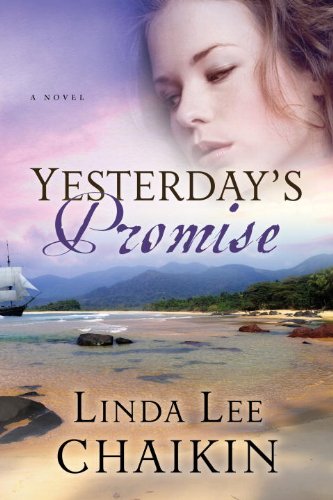
Yesterday's Promise (East of the Sun)

(Waterbrook Multnomah - First Published 2004, Reprint - East of the Sun, #1)

Secrets (Glenbrooke)

(Waterbrook Multnomah - First Published 1994, Reprint - Glenbrook, #1)

The Golden Cross (Heirs of Cahira O'Connor #2)

(Waterbrook Multnomah - First Published 1998, Reprint - Heirs of Cahira O'Connor, #2 - Sequel to The Silver Sword)

Tuesday, December 15, 2009

FIRST Chapter: Shadow Government

Today's Wild Card author is:


and the book:


Shadow Government

WaterBrook Press (October 6, 2009)

***Special thanks to Staci Carmichael of WaterBrook Multnomah Publishing Group for sending me a review copy.***

ABOUT THE AUTHOR:


Grant R. Jeffrey is the internationally known prophecy researcher, Mideast expert, and author of Countdown to the Apocalypse, The New Temple and the Second Coming, The Next World War, and twenty other best-selling books. He is also the editor of the Prophecy Study Bible. His popular television program, Bible Prophecy Revealed, airs weekly on TBN. Jeffrey earned his master’s and PhD degrees from Louisiana Baptist University. He and his wife, Kaye, live in Toronto.

Visit the author's website.

Product Details:

List Price: $13.99
Paperback: 240 pages
Publisher: WaterBrook Press (October 6, 2009)
Language: English
ISBN-10: 1400074428
ISBN-13: 978-1400074426

AND NOW...THE FIRST CHAPTER:


Part 1

TECHNOLOGY

THAT DESTROYS

YOUR PRIVACY


Chapter 1

YOU HAVE NO MORE PRIVACY

In the War Against Privacy, You Are the Target

An undeclared but very real war is being waged on your privacy and freedom. Your movements, personal communications, preferences, loyalties, habits—all these things are no longer private. And in spite of the fact that our privacy and liberty are under attack on multiple fronts, the average citizen in the Western world seems blissfully unaware of the threat.

We assume that our privacy, “the right to be left alone,” is secure. We couldn’t be more wrong. High-tech surveillance methods used by governments responding to the threats of terrorism, drug trafficking, tax evasion, and organized crime are stealing one of your most basic human rights—the right to privacy, the right to be left alone.


THE ALL-SEEING EYES


An interesting metaphor for the invasive surveillance society is found in a fascinating proposal for eighteenth-century prison reform. In 1785 philosopher and legal reformer Jeremy Bentham advocated that the English government build a state-of-the-art prison to more efficiently observe and guard dangerous prisoners with twenty-four-hour surveillance. Bentham’s proposed Panopticon prison called for the use of optical instruments and mirrors to allow a very small team of guards stationed in a central tower to observe hundreds of prisoners. Bentham’s system was designed in such a way that prisoners would never know when they were under active surveillance.

The idea was that the fear of continuous surveillance would motivate inmates to police their own behavior. Tragically, the practical application of Bentham’s nightmare vision is becoming reality in the twenty-first century. Advanced surveillance technologies available to government, corporations, and even your neighbors have created a twenty-four-hour, 365-day, total-surveillance society—the same system that would have violated the privacy of British prison inmates in 1785.

The current British home secretary, Jacqui Smith, exercises political control over all UK counterintelligence operations. This includes Scotland Yard’s

Counter Terrorism Command, the Security Service (MI5), and Government Communications Headquarters (GCHQ), the British government’s global eavesdropping operation. Smith is working to establish an enormous computer database that would collect for analysis every telephone call, all Internet searches, and all e-mails being transmitted within or outside of the United Kingdom.1


Your Life on Camera

Smith’s plans are but one manifestation of the all-seeing, all-hearing surveillance. The installation of closed-circuit television (CCTV) cameras in public places makes our daily activities, including our private interactions, a matter for close examination by unseen observers. My wife, Kaye, and I conducted a research trip in the United Kingdom in 2008. Although I had previously documented the massive adoption of CCTV by local councils and national authorities in the UK, I was stunned to see the extraordinary expansion of that type of surveillance. By the end of 2008, millions of CCTV cameras were monitoring the activities of every citizen and visitor in the country. The United Kingdom, the mother of Western political freedom and democracy, is now the most obsessively watched society in the West.

Surveillance cameras followed us during every step of our passage through UK customs and British immigration at Heathrow Airport. And it didn’t stop there. We were on camera as we acquired a car at the rental car agency office and as we proceeded out of the airport parking garage. As we entered the main highway, we noticed traffic-control cameras monitoring virtually every mile and covering every road, even in small towns. More than two thousand car-recognition cameras capture photos of cars, license plates, and drivers along with their passengers. Cameras recorded us as we purchased gas and food. Recent estimates by British authorities suggest that citizens and tourists alike will be captured on camera an average of five hundred times every day. Even London’s city buses are outfitted with an astonishing sixty thousand cameras, in addition to the ten thousand CCTV cameras on subway cars and trains.

But despite the almost universal presence of CCTV, even in back alleys, law enforcement authorities report that the cameras have not suppressed violent crime as much as they have displaced it. Surveillance cameras motivate criminals to move their activities a few blocks away—to a location with less-active CCTV surveillance.

A few years ago a million CCTV systems were operating in the United Kingdom. However, a 2008 article in the Guardian stated that an astounding 4.2 million CCTV cameras were being used in the surveillance of UK citizens and tourists.2


Cameras That Hear

It now goes far beyond simple cameras mounted on utility poles. Scientists have developed “listening” cameras that, paired with artificial intelligence software, recognize particular sounds such as gunshots, car crashes, and breaking glass. In response to certain sounds, the camera rotates and captures what could be a criminal or terrorist act. Despite the enormous financial cost and the invasiveness of the CCTV system, a report by the UK Home Office concluded that better street lighting is seven times more effective in preventing crime.

If watching you and listening to what you are saying is not enough, some new versions of CCTV technology enable police supervisors to confront you verbally through a speaker system. Law enforcement personnel can issue an immediate warning if they feel you are engaging in illegal behavior. And just in case all of this has not been disturbing enough for you, some UK municipalities are broadcasting local CCTV coverage on television. They ask citizens to tune in and watch so they can inform on the activities of their neighbors. Welcome to the world of block informers, a system you thought was limited to the horrors committed by the Nazis, the Soviets, and Communist China.

CCTV surveillance doesn’t end with cameras posted in public places. Miniature security cameras designed to promote safety and control crime on private property are now used for vastly expanded purposes. Companies use CCTV for the continual surveillance of employees during work-hours. They are observed at their desks, in washrooms, and throughout the office area. Employers justify the spying operations against employees, vendors, clients, customers, and visitors as a way to combat theft and industrial espionage. No matter what reasons are used to justify the surveillance, you are losing your privacy in just about every setting imaginable.

We live in a total surveillance environment that closely resembles the horror described by George Orwell in his famous novel 1984. Orwell described a future global regime composed of three totalitarian governments. In comparison to his horrific vision, computer technologies developed in the last few decades have created a daily environment far more threatening than any faced by the character Winston in 1984.


THEY KNOW EVERYTHING ABOUT YOU


The loss of privacy goes far beyond having your public activities monitored on camera. Scott McNealy, CEO of Sun Microsystems, declared some time ago that “privacy is dead, deal with it.”3

There are legal means that individuals and businesses can use to acquire and store information about you, obtained from your use of the Internet and even from such ordinary activities as shopping for groceries, buying a movie ticket, or ordering items online. You might think that you don’t provide information to governments, law enforcement agencies, and marketers. However, you are dispensing vast amounts of personal information every time you use a check, credit card, or debit card. Every time you make a purchase using these forms of payment, you supply information on your bank account, financial history, buying habits, and product preferences.

It seems that no information about you is insignificant. Your Internet searches, your online shopping, the e-mails you send, and the Web sites you access—all of these are of interest to someone. The subjects that attract you, the causes you support, your brand preferences, the topics you research on the Web, your reading habits online—all of these are important to Web site operators. Everything you do on the Internet, including visiting Web sites and chat rooms, sending and receiving e-mail, researching health issues and medical questions, and shopping is permanently recorded in a computer database. Google, the most popular Internet search engine, has admitted that it gathers and stores information on every one of the more than 330 million Internet searches completed every day.

What’s more, every e-mail you’ve ever sent or received and all the online searches you have completed are available to police and intelligence agencies. Who is so careful in what they say in private e-mails that they would never include a statement that might someday be considered suspicious to certain government authorities? And who considers the potential damage to their future career plans or credit rating that could result from research they have done using the Internet? For example, an innocent medical search to gain information about a disease such as Alzheimer’s, even if you are doing the research for a relative or friend, could be accessed by an investigator during a background check when you apply for a job. Even the possibility of a link between a prospective employee and a devastating disease could be sufficient cause to reject your employment application.4


Your Entire History on Exhibit

Attacks on privacy are not new. Beginning in 1917, after destroying the first elected government of Russia, the new communist dictatorship of Lenin began a process of secret police surveillance of its entire society. Even in the democratic nations of the West, government intelligence and police agencies created a surveillance system to monitor citizens’ activities. Prior to this war on privacy, only the few individuals suspected of criminal activity, sabotage, or sedition were considered worthy of police surveillance. But now, with rapid advances in sophisticated surveillance devices and computer technologies, most national governments have developed an intense interest in every citizen. Governments gather enormous amounts of previously private information on the assets, activities, communications, financial transactions, health, and political and religious activities of virtually every person on earth—and with relative ease.

Many military intelligence agencies, government agencies, and large corporations have introduced sophisticated security systems requiring employees to wear a badge containing a radio frequency identification microchip. This RFID chip enables companies, agencies, and organizations to monitor the location and activity of every worker during every moment he or she is on the premises. When an employee enters the office, a computer records the exact time and begins monitoring his or her every move throughout the day. Security sensors at strategic locations throughout the office complex record the location and duration of the activities of the badge wearer.

Many office phone systems monitor all private phone calls made by employees while at work. Computerized phone systems maintain a permanent record of all known phone numbers of clients, customers, and vendors. If an employee places a personal call, the phone system records the unauthorized number and produces a report of the employee’s private calls, along with the duration of such calls. This data can be used against the employee at the next performance evaluation.5

It’s interesting that U.S. corporations are using secret employee surveillance more than businesses in any other nation. The American Civil Liberties Union has warned, “Criminals have more privacy rights than employees. Police have to get a court order [to eavesdrop on suspected criminals], whereas in the workplace, surveillance can be conducted without safeguards.”6 Computer network security supervisors in many companies go as far as to monitor the keystrokes and productivity of all employees who use a computer in their work. Employees often complain about the stress they experience knowing they are being monitored constantly throughout the day. In many companies, computer spy ware monitors an employee’s Internet activities. Add to this the growing use of random drug testing, secret cameras in washrooms, and intrusive psychological questionnaires. The bottom line is that companies are creating an adversarial and unhealthy psychological environment for workers.

You should be appalled to know that your local and state police, federal intelligence agencies, government officials, employers, and even curious neighbors and business competitors can acquire virtually all of your private information. A record of your travel destinations, the newspapers and books you read, your video rentals, your pay-TV choices, your traffic tickets, your medical tests, as well as your private purchases are recorded in computer files. Anyone with enough computer knowledge can access your information, legally or not.

There is a growing public awareness and concern about the numerous attacks on our privacy through the misuse of computer records. However, the United States Congress and Canada’s Parliament have failed to enact serious laws to protect the privacy of citizens’ medical, criminal, and financial records.


Your Secret Life Now on Camera

Security companies that work under contract for large corporations have found ways to make use of advances in surveillance devices. Virtually invisible pinhole cameras can be placed behind a wall to monitor everything that goes on in an adjacent room, both visually and audibly. The tiny lens, which is the size of a pinhead, is unnoticeable. Infrared cameras can record images silently and in near-total darkness. Another type of surveillance camera can be concealed in a mobile telephone, recording events through the tiny hole normally used for the microphone. This tool often is used for industrial espionage, stealing trade secrets from a competitor. It is also useful in gaining the upper hand in business negotiations. For example, during a face-to-face meeting in a protracted negotiation, the user of the cell phone can leave the phone in the boardroom when he exits to take a break. As the other team discusses their strategy, supposedly in private, the cell phone is recording the conversation.

Surveillance devices are also being used much more widely by individuals. For several hundred dollars, you can obtain a device that enables you to monitor every conversation that takes place in your home or office while you are away. A remote monitoring device known as the XPS-1000 allows you to listen to conversations in your office or home by using the telephone. From a remote location, you dial your phone number using a secret activation code. The phone will not ring, but from that moment on, you can monitor every sound in the room where the phone is located. Another tiny device, a micro transmitter powered for three months by a miniature battery, can be left in any room and will broadcast for a distance of up to one thousand yards to a hidden radio receiver–tape recorder.

While fascinating, the miniaturization of cameras, microphones, and recording devices has stolen what was left of our privacy. If a person is determined to monitor your activities, you can’t prevent it. You can try to guard your privacy by using a software program or device designed to protect your communications. But in doing so, you will have inadvertently alerted intelligence agencies and private investigators that you have something worth keeping private. This may cause them to increase the level of surveillance in an attempt to discover why you want to avoid it.


Abuse of Legitimate Data

All U.S. intelligence agencies, including the Bureau of Alcohol, Tobacco, Firearms, and Explosives (ATF) and the Federal Bureau of Investigation (FBI), can access data from the National Identification Center to identify and monitor every registered gun owner in the United States. However, we have to ask this question: what else will government agencies pursue using legitimate and legally acquired data?

Two of America’s most secretive agencies, the National Reconnaissance Office (NRO) and the National Security Agency (NSA), maintain a massive global surveillance system known as Project Echelon. This system can monitor every telephone call, fax, Internet search, and e-mail transmission worldwide. (We will look more closely at the remarkable capabilities of this massive surveillance system in chapter 5.) We need to face the sobering truth that we can’t escape the growing surveillance capabilities of all governments, both East and West. These developments turn our attention to the last-days prophecy from the book of Revelation about a coming totalitarian police system. John warned that a person’s every activity will be controlled: “That no man might buy or sell, save he that had the mark, or the name of the beast, or the number of his name”

(Revelation 13:17). Remarkably, John was describing a universal population control system that would impose some kind of numerical identification on every person in order to monitor his or her financial transactions, trade, business, and ability to buy and sell. This system will enable law enforcement authorities working for the Antichrist and his partner, the False Prophet (see Revelation 13:16), to control the world’s population through a unique ID, based on the number 666, on everyone’s right hand or forehead. The recent subcutaneous pet identification chips could easily be inserted in each human being.


WHO WANTS TO CONTROL YOU?


Government authorities, national security agencies, and businesses that market and sell consumer products know far more about you than most of your friends and family will ever know. People you will never meet have compiled personal information about the details of your daily life, place of residence, type of residence, spending habits, and financial assets. Government agencies justify the invasion of your privacy by reminding us of the threats posed by international terrorism, organized crime, the influx of illegal immigrants, and citizens who defraud the government as welfare cheats or tax evaders.

The NSA possesses detailed records of millions of U.S. citizens, including your communications, health status, medical treatments, employment status, vehicle ownership, driving record, criminal record, and real-estate holdings. In addition, all of your credit records, banking and financial transactions, credit rating, educational transcripts, and travel records are available to many major corporations and government research institutes.

Your life is also of great interest to foreign governments. Most of the Western democratic governments, as well as the governments of China and Russia, are thought to maintain enormous computer databases filled with details about millions of U.S. citizens. Data storage is just the first step. Next will be the most effective ways to organize, categorize, and use this private information. This hurdle will be removed when the government assigns a unique identification number to each citizen. Once that is accomplished, the staggering number of separate files on individual citizens in various databases can be combined into a single massive intelligence file. (We will talk more about this process in chapter 3.)

A confirmation of the consolidation of citizen data was publicized in the Canadian press on May 19, 2000. The Canadian government reluctantly confirmed that up to two thousand significant pieces of information had been assembled on virtually every Canadian citizen in a massive database known as the Longitudinal Labor Force File. As a result of strident public criticism following these revelations, the Canadian government promised to destroy the computer program that linked these files. However, the federal government admitted they still will retain computer data on more than thirty million Canadians— data that are retained in separate computer files held by a variety of government departments, including the Canadian Security Intelligence Service (CSIS), Royal Canadian Mounted Police (RCMP), Immigration, and provincial police forces.7


A SECRET CHIP IN YOUR CREDIT CARDS


Your credit and debit cards are much more than a convenient way to pay for goods and services. The magnetic strip on a credit card or debit card holds electronic data verifying your identity, as well as information validating your right to access particular computer databases, such as your bank accounts. More and more, these cards are being replaced by higher-security smart cards that contain even more information about you. A smart card contains an embedded RFID chip capable of holding millions of times more digital information than is contained in a card’s magnetic strip.

Smart cards provide high levels of security, since they are capable of storing biometric information, such as the iris pattern in the eye of the authorized user. These new cards will document the user’s identity by measuring 173 distinct characteristics from the rings, burrows, and filaments within the iris. The stored data is compared with an iris scan made by a surveillance camera that can read your iris pattern from a distance of several yards.

Other identifying data include your precise hand geometry, which involves identifying you by measuring the length of your fingers and the translucence and thickness of your skin. Infrared scanners can reveal and record the patterns of veins on your palm or the back of your hand. Voice-recognition software can confirm your identity through digital measurement of your voice tone and timbre. Incredibly, a new machine can puff air over the back of your hand, analyze your subtle body odors, and detect as many as thirty separate trace chemical elements that supply a positive identification reading.8 All of this data, and more, can be stored in an RFID chip.

Soon you will be able to replace your credit and debit cards with one very secure smart card that is virtually immune to counterfeiting and attacks by hackers. The data will be encrypted, and your unique passwords—including biometric information—will be required for you to use the card. More than two and a half billion radio frequency smart cards now in use worldwide can perform these functions:

cash transactions such as rechargeable stored-value cards that carry a predetermined monetary value
confidential transferring of medical data to paramedics and hospital in the event of a medical crisis
control of entry into high-security workplaces and computer systems
access to air travel as well as to trains, subways, and buses


These are some of the benefits of the smart card.9However, the growing use of RFID cards will make it possible for government, police, and intelligence agencies to track the activities, location, communications, and financial transactions of every citizen from cradle to grave.


AN INTERNATIONAL STANDARD FOR PRIVACY


Growing concerns over privacy have motivated representatives of member nations of the European Union (EU) to create an international standard for privacy. The basic rules are as follows:

All privacy regulations apply to both government and private organizations.
Data collection should be limited to that which can be obtained legally and with the knowledge and consent of the citizen subject, except where this is impossible or inappropriate (e.g., criminals).
Data sought on individuals should be limited to the original purpose and kept up to date. The purpose of data collection should be specified, and subsequent use of data should be limited to the original purpose.
No personal data should be disclosed to others without the consent of the subject or without a court order.
All personal data must be kept secure using all reasonable precautions.
All citizens should be able to access, review, and challenge inaccurate data held in databases.
The government agency controller of the database should be legally and criminally accountable for abiding by these privacy principles.
The policies and practices of organizations holding databases on individuals should reveal the information to those who legally inquire.
Private data collected by EU member corporations and states may not be transmitted to organizations in nations that do not have privacy regulations equal to those of the European Union.10


The introduction of similar legislation in America, Canada, and other democratic nations could provide significant protection against the abuse of our privacy. The Organization of Economic Cooperation and Development (OECD) is an international group of twenty-nine developed nations from North America, Europe, and Asia that has suggested the creation of powerful, binding privacy standards for both governments and businesses.11

The reality is that the growing attacks on our personal security are rapidly overwhelming the proposed defenses. One potential solution is to use a smart stored-value card that would allow a person to make a payment while the card restricts the merchant from accessing the purchaser’s identity. The card would also prevent merchants and anyone receiving an electronic funds transfer from tracking previous purchases made by that customer. For example, a smart card developed by Mondex International allows customers to transfer funds from their card to a merchant’s account to make a purchase. However, when the merchant’s bank accepts the transfer of funds to cover purchases made using Mondex cards, the bank is not able to identify the actual purchasers. A similar system is used by Visa International in its Visa cash card. The disposable card does not permit merchants to identify the person who used the card.


WHAT YOU CAN DO


There are hopeful signs that, after years of indifference to the threats to our privacy and financial security, the public is awakening to the heightened dangers posed by new surveillance technologies.

When it was revealed that Intel Corporation had embedded in every Pentium III chip a secret serial number that would allow the person using the computer to be identified, customers and privacy groups launched a protest.12 Additionally, Microsoft had embedded a hidden identification number in all documents produced by any computer using Microsoft software. The protests that followed forced the company to provide a free software program that eliminated the identifying number.13 However, the vast majority of computer users of Microsoft software are unaware of the privacy problem, and most lack the expertise to fix it.

If we are to protect what little privacy we still have, we should encourage a healthy debate about the relative advantages and disadvantages of each new technological development. Citizen involvement and thoughtful protest against the governmental and corporate threats to our privacy can slow down this relentless attack. We need to defend our right to maintain a personal life that is free from outside interference and intrusion.

Still, in violation of constitutional guarantees to the contrary, our society continues to move toward an all-encompassing surveillance society, which is described in the prophecies of the book of Revelation. We will live to see the time when our right to privacy and the freedom to be left alone are nothing more than distant memories.


This one looks interesting, but looks like it might give me a headache thinking out a million scenarios. I'm sure there are many that this book will be right up their tree.


Friday, December 4, 2009

Blog Tour: Treasured

Treasured: Knowing God by the Things He Keeps
Cigar boxes. Refrigerator doors. Scrapbooks and sock drawers and top shelves. These are the places we store our treasures–the keepsakes that tell the story of whom and what we’ve loved, how we’ve lived, and what matters most to us.

God is a collector, too, whose treasures are tucked securely into the pages of his book: a golden bell here, an olive leaf there, a scarlet thread, a blood-stained cloth, a few grains of barley. Each of these saved artifacts reveals a facet of his heart and tells the story of a Father whose most precious possession is…us.

In Treasured, Leigh McLeroy considers tangible reminders of God’s active presence and guides us in discovering evidence in our own lives of his attentive love.


Find more information and purchase at Random House.


This book itself is a treasure. Reading the words from author Leigh McLeroy opens memories up into my own family and makes me really see the different pieces of love set out from Christ for me personally. This would be a great gift book for anyone.

*Thanks to Waterbrook Multnomah for providing a copy for review.*

Wednesday, December 2, 2009

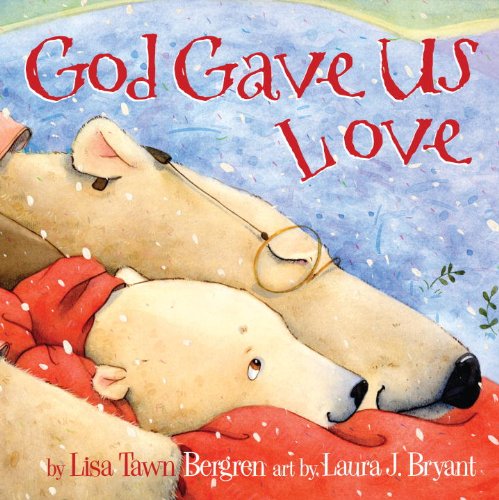
Review: God Gave Us Love

God Gave Us Love

As Little Cub and Grampa Bear’s fishing adventure is interrupted by mischievous otters, the young polar bear begins to question why we must love others… even the seemingly unlovable.

In answering her questions, Grampa Bear gives tender explanations that teach Little Cub about the different kinds of love that is shared between families, friends, and mamas and papas. Grampa explains that all these kinds of love come from God and that it is important to love others because…

“Any time we show love, Little Cub, we’re sharing a bit of his love.”

This sweet tale will warm the hearts of young children as they learn about all the different sorts of love, while the gentle explanations of each provide a valuable opportunity to encourage children to share with others a “God-sized love.”

My rating: 5 of 5 stars

What an absolutely delightful children's book. This is my favorite of Lisa's children's stories so far. In a fabulous and adorable manner Grampa explains to Little Cub why and how God gave us love. The pictures are too cute if you take the time to see the side line stories and hear the slight whine and pitch of Little Cub's voice. I absolutely love one picture that sent me into fits of laughter with snowballs. *wink* I treasure this book and I am so glad I have this story to be able to share one of God's very powerful truths in such a great explanation way with my daughter. I highly recommend this book and cannot wait to get my hands on others of Lisa's children's books.

View all my reviews >>


Lisa Tawn Bergren is the award-winning author of nearly thirty titles, totaling more than 1.5 million books in print. She writes in a broad range of genres, from adult fiction to devotional.God Gave Us Love follows in Lisa’s classic tradition of the best-selling God Gave Us You. She lives in Colorado, with her husband, Tim, and their children, Olivia, Emma, and Jack.

Visit the author's website.

Find on Random House.


I also really enjoy Lisa's adult Christian historical fiction as well as her other God Gave Us titles, such as God Gave Us Heaven. Read more… God Gave Us Heaven is one of the best children's book with the most important message that is often hard to explain. I love Lisa Tawn Bergren's adult fiction series and now I love her children's books as well and cannot wait to add others to my shelf. The pictures are wonderful and provide for much exploring and conversation. It is definitely a book I would recommend for my nieces and nephews.

*These books were provided for review by the WaterBrook Multnomah Publishing Group.*


Monday, November 30, 2009

Review: God Gave Us Chrstmas

Photobucket


As Little Cub and her family prepare to celebrate the most special day of the year, the curious young polar bear begins to wonder…
“Who invented Christmas?”
Mama’s answer only leads to more questions like “Is God more important than Santa?” So she and Little Cub head off on a polar expedition to find God and to see how he gave them Christmas. Along the way, they find signs that God is at work all around them. Through Mama’s gentle guidance, Little Cub learns about the very first Christmas and discovers that…
Jesus is the best present of all.
This enchanting tale provides the perfect opportunity to help young children celebrate the true meaning of Christmas and to discover how very much God loves them.

My rating: 5 of 5 stars

Whenever I search for a children's book dealing with Christmas time, it's always a challenge and question on whether or not to deal with a book about Santa or about Jesus. This wonderful little treasure from Lisa's God Gave Us series makes it where there is not a choice, but just truth. Here, Mama takes time to show Little Cub in detailed images why and how God gave us Christmas and intertwines how Santa fits into the picture. I love the poetry of the prose and the pictures are fabulous and colors are wonderful to look at. I truly enjoyed sharing this story with my daughter and look forward to reading it more and more in the years to come and highly recommend it!

View all my reviews >>

Find on Random House here.

Lisa Tawn Bergren is the award-winning author of nearly thirty titles, totaling more than 1.5 million books in print. She writes in a broad range of genres, from adult fiction to devotional.God Gave Us Love follows in Lisa’s classic tradition of the best-selling God Gave Us You. She lives in Colorado, with her husband, Tim, and their children, Olivia, Emma, and Jack.

Visit the author's website.

David Hohn is an award-winning illustrator who graduated with honors from the Maryland Institute College of Art. He has worked as both a staff artist and an art director for a children’s software company in Portland, Oregon, a position which led to his art directing an award-winning project for Fisher-Price. Hohn’s recent projects include Lisa Tawn Bergren’s God Gave Us Christmas.

Visit the illustrator's website.


I also really enjoy Lisa's adult Christian historical fiction as well as her other God Gave Us titles, such as God Gave Us Heaven. Read more… God Gave Us Heaven is one of the best children's book with the most important message that is often hard to explain. I love Lisa Tawn Bergren's adult fiction series and now I love her children's books as well and cannot wait to add others to my shelf. The pictures are wonderful and provide for much exploring and conversation. It is definitely a book I would recommend for my nieces and nephews.

*These books were provided for review by the WaterBrook Multnomah Publishing Group.*


Tuesday, November 17, 2009

Review & Blog Tour: Thirsty

Thirsty: A Novel Thirsty: A Novel by Tracey Bateman

There's no place like home, they say.
"Hello, I'm Nina Parker…and I'm an alcoholic."
For Nina, it's not the weighty admission but the first steps toward recovery that prove most difficult. She must face her ex-husband, Hunt, with little hope of making amends, and try to rebuild a relationship with her angry teenage daughter, Meagan. Hardest of all, she is forced to return to Abbey Hills, Missouri, the hometown she abruptly abandoned nearly two decades earlier–and her unexpected arrival in the sleepy Ozark town catches the attention of someone–or something–igniting a two-hundred-fifty-year-old desire that rages like a wildfire.

Unaware of the darkness stalking her, Nina is confronted with a series of events that threaten to unhinge her sobriety. Her daughter wants to spend time with the parents Nina left behind. A terrifying event that has haunted Nina for almost twenty years begins to surface. And an alluring neighbor initiates an unusual friendship with Nina, but is Markus truly a kindred spirit or a man guarding dangerous secrets?

As everything she loves hangs in the balance, will Nina's feeble grasp on her demons be broken, leaving her powerless against the thirst? The battle between redemption and obsession unfold to its startling, unforgettable end.


My rating: 3 of 5 stars

While reading this book I came across several reviews. Most of which are extreme opposites in their opinions. Some people were wanting a Christian Twilight, which I actually take offense to since I found so many Christian elements with in that story itself, but that is a conversation for another day. The only similarity here to that saga itself is the idea of a "vegetarian vampire", one who finds resentment in the idea of harming an innocent human. Other people think it is outrageous to the idea of having a Christian vampire novel, but the message behind the story is what makes it Christian. As in most things there are levels of evil within all of us that we must overcome. Be it something that we believe as from folklore or something that we know is passed down in our genetics, the importance of a lesson is learning from it and walking forward.

There were some people who stated disappointment with this novel after having read other Tracey Bateman books. Well that is not my opinion and as an all you can not relate this to any book she has written in the past as it is entirely in a realm of it's own. I have also read reviews of people who were enthralled from page one and could not put it down or turn the pages fast enough. In my case, I definitely was not disappointed, but I was not fully captivated either. This story is good, the lesson underlying is deep, personal and important to read. I do think that the character of Markus could have been more. In saying that I am not sure if I mean more developed or more page time. I just feel that there is a lot more to his character than meets the page translation. To be honest it was about page 200 where I was truly intrigued and excited about the story, but it continued well and I overall liked it. My personal opinion is that there could have been more, but I am just not sure of what. Luckily, there will be more books to come from Tracey in the future.

*Special thanks to Waterbrook Multnomah for providing a copy for review.*

View all my reviews >>

Find this book on the Waterbrook Multnomah page here.

  • Paperback: 384 pages
  • Publisher: WaterBrook Press (October 6, 2009)
  • Language: English
  • ISBN-10: 030745715X
  • ISBN-13: 978-0307457158
  • Product Dimensions: 7.8 x 5.1 x 1 inches

Monday, November 16, 2009

Review & Blog Tour: White Picket Fences

So, I'm reposting this one with a bigger cover image, so that you can get the full effect. This is one that I have available for giveaway from the author, but have yet to hear from a winner. Anyone else interested while I'm in a good mood and willing to give a chance?? *wink*


White Picket Fences: A Novel


Summary:
Amanda Janvier and husband Neil take motherless niece Tally into their seemingly storybook life, all the while refusing to acknowledge that their son Chase is haunted by memories of the horrific house fire no one talks about. Secrets of the past can’t stay hidden forever behind their white picket fence.

Author Bio:
Susan Meissner cannot remember a time when she wasn’t driven to put her thoughts down on paper. Her novel The Shape of Mercy was a Publishers Weeklypick for best religious fiction of 2008 and a Christian Book Award finalist. Susan and her husband live in Southern California, where he is a pastor and a chaplain in the Air Force Reserves. They are the parents of four grown children.


My rating: 3 of 5 stars

When I heard about this new novel from Susan Meissner, I was extremely excited because to me "The Shape of Mercy" is now a classic that all students who study the Crucible should also have to read. While "White Picket Fences" is a completely different type of book it is still incredible writing. For me, I would not necessarily call it a favorite, but overall as a whole (redundant I know, but making a point here) I enjoyed it. Looking at the cover of this book tells you the most of what you need to know. There is the white picket fence slats and then a spiders web weaving it's way right in. Perfectionism would make one want to get rid of the web and go back to perfection, but the artistic persona would believe that the web was part of the whole picture that made it a different kind of perfect. Really, this cover could not be more appropriate for the message within the story.

Several characters share their point of view and take the slot as the main protagonist going throughout the book. There is Amanda, the mother who realizes everything is fading from her grasp and her way of dealing seems to be to sit and watch it go. Then there is Tallulah, or Tally, the cousin that has had a roller coaster life, or at least it would seem that way to an outsider. Learning the obstacles and neat realities of her life is an adventure and really not all bad. Lastly of main people, there is Chase, the son who deals with a memory that he cannot see the entirety of and possibility seems to push him further and further to the edge.

There were times while reading that I was just ready for something to happen. While there are some action events in this novel that is not the type of novel that it is. This book is more about the inner part of a person and how things change and affect it. It is incredible the way that Susan writes and she can really get to you as a reader and challenge your own emotions and the way that you see things in your own life. So many people try to live the life of perfection and it is interesting how they react when things do not quite pan out that way. The questions and changes to the lives of the characters is not what one would expect after reading the book blurb or hearing a summary. There are psychological elements here and they are barely touched upon in the writing, but present non the less.

I personally, put this book on the keeper shelf, but recommend that when you read it to have some time available so that you can mull over just what it is that you should take from reading the novel.

*This book was provided for review by Waterbrook Multnomah.*

View all my reviews >>

Click here, to go to RandomHouse to find more information and options to purchase.

  • Paperback: 368 pages
  • Publisher: WaterBrook Press (October 6, 2009)
  • Language: English
  • ISBN-10: 1400074576
  • ISBN-13: 978-1400074570


Friday, November 13, 2009

Guest Review: The Healing Quilt

The Healing Quilt


The Healing Quilt

By: Lauraine Snelling


After her Aunt Teza’s test results turn out to be inconclusive, Dot Cooper resolves to raise money for a new mammogram machine, through the creation and auction of a magnificent, king-sized quilt to be sewn by the women of Jefferson City.

Dot’s efforts quickly draw the support of disparate members of the community, including newcomer Beth Donnelly, married to a local pastor, Elaine Giovanni, the stylish wife of a local surgeon; and an ailing Aunt Teza. But as the four different generations work the squares of the quilt, they are also confronted with ragged pieces of their own lives.

Though the women could not be more different on the surface, they hold in common quiet suffering triggered by painful circumstances: the death of children, the abandonment of husbands, the loneliness of depression. Yet their struggles will bring them closer together than they ever could have anticipated, and their lives will be dramatically changed, as together they experience the curative powers of The Healing Quilt.


A cancer-ridden town is raising money for a new mammogram machine. These women's difficulties in their lives are unraveling as they quilt this blanket together. I have to give it 4 out of 5. I could very easily put it down and sometimes the characters were confusing to me, I'd get one messed up with another. The one good thing is I have thought about making a Crochet blanket for our Relay for Life in my local town to auction off. I appreciate Ms Snelling writing her "daughter's story" and all the time and effort she put in it.


--
Amy Kittel
Award-winning Mary Kay Independent Beauty Consultant
www.MaryKay.com/akittel

Building relationships and enriching women's lives one facial at a time!
Contact me today to find out how to freshen your look and be a part of America's most trusted line of beauty products!
Remember: Faith first, family second, career third!

Find on Random House here.